Co-writing – what is it and when does it occur?


In addition to individual work on content, a common form of creation is collaboration on a single material. We refer to this as co-writing. What is co-writing, in what forms does it occur and what are the rules of cooperation? Let’s find out!
What is co-writing?
Co-writing is a form of creating any content in which at least two authors are involved.
It is accepted that co-writing can take several forms. We present a few of them:
- collective – one person collects ideas and knowledge from the other co-authors, creating the final version;
- sequential – the co-writer creates the content and passes it to the next person for editing;
- parallel – each member of the team creates a part of the final result and one of them combines the content into a whole;
- layered – each author adds content to the project in which they specialize the most;
- reactive – individuals involved in the project create content at the same time and exchange feedback during the process.
Role in co-writing
There are three roles that define co-writing. Each of them is associated with a different type of relationship and level of involvement of individual co-authors. Below we present possible relationships between authors in co-writing.
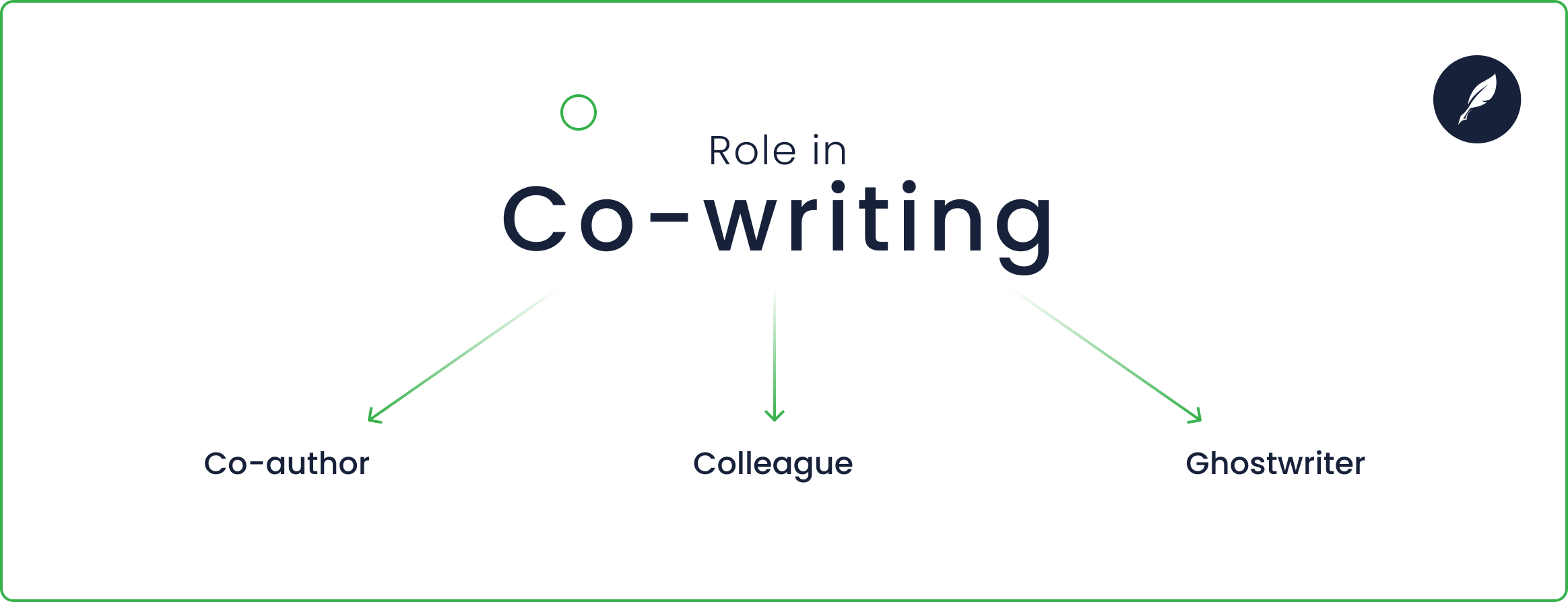
Co-author
Being a co-author is the most demanding form of collective creation. Each of the authors then has the right to contribute their vision to the final version of the work and to be treated equally.
All co-authors also have the right to be signed with their own name, according to their involvement in the project. Such a system is used, for example, in academic publications.
Colleague
Creating content with the help of a collaborator gives the author more freedom. The collaborator contributes certain input to the creative process, such as concepts, knowledge, or experience, but it is the author who decides to what extent they will utilize the provided content.
The coworker, however, retains the right to authorize those content elements on which they had an impact, thus avoiding distortion of the introduced idea.
Ghostwriter
Another form of cooperation is ghostwriting – a situation in which the true author of the content remains undisclosed and their work is attributed to the ordering person. This is a legally recognised practice, provided that copyright and intellectual property rights are properly regulated.
See also
Advantages of working with co-authors
Working on content in a group allows primarily to save time. Thanks to the synergy effect, many team members achieve better results than a single author.
Group content creation, regardless of the working method, also provides space for development for all co-writers. Co-authors gain insight into new ideas, different ways of thinking, and knowledge from other individuals.
Disadvantages of group writing
Collaborative creation also has its drawbacks. If you are not a person inclined to compromise, the “clashing” of different ideas will be an inherent element of co-writing. Regardless of the form of the content being created – whether it is a publication, infographic, or video – one must respect the right to their own beliefs and seek solutions that will be acceptable to both parties.
3 rules of cooperation with a co-writer
The co-writing process can take various forms, depending on the number of contributors and the nature of their collaboration. Whether working with a co-author, receiving input from colleagues, or incorporating feedback from external reviewers, effective cooperation relies on three key principles:
- Transparency in the process of making changes – both towards the co-author and colleagues. Consulting all modifications allowed her to avoid conflicts for most of the work on the book.
- Keeping established deadlines – gathering all opinions and comments from colleagues within a specified time significantly accelerated the work on the draft for the publishing house.
- Mutual respect for their views – each proposed change was considered not only during writing but also in the editing process.
Summary
- Co-writing is the process of creating content by more than one person.
- The most common roles in co-writing collaboration are co-author, collaborator and ghostwriter.
- The advantages of group collaboration include time savings and the ability to exchange knowledge and experiences among authors.
- The biggest disadvantage of group work is the risk of conflicts arising.
- The key principles of co-writing collaboration are clear division of roles among co-writers, sticking to deadlines, and respecting different perspectives.











Leave a Reply